
If 2025 were to be summed up in tech terms, it would be The Year of AI. From agentic AI to uber-cool AI glasses, we reflect on the biggest and most innovative AI trends for 2025.
New to the Team: AI
A couple of years ago AI looked like a menacing, know-it-all, job-stealing robot. Today, AI has become the all-efficient, time-saving colleague we see and work with every day – from taking notes to sales strategies and everything in between.
The launch of ChatGPT in 2022 was arguably society’s biggest introduction to AI. It was the first time that the general public had such easy and free access to an artificial intelligence platform. We were fascinated by it, testing its capabilities and boundaries and still on the fence about what it meant for humanity – erasure or elevation. Two years down the line, society has let it in. We went from threatened to adoptive and we’ve learned to integrate it into our ways of work and leverage its power. In this year alone, over 346 million people have used AI.
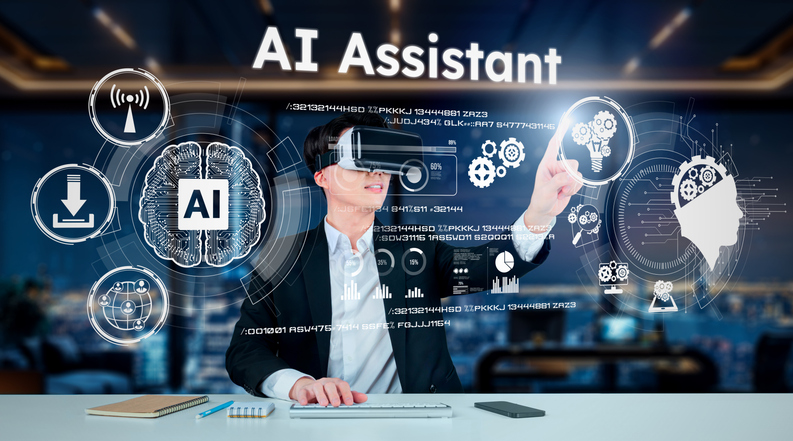
Agentic AI: The One That Acts For You
Agentic AI is AI that takes initiative. It’s proactive, automates tasks, and completes actions without needing constant instructions. Unlike traditional AI that only responds to prompts, agentic AI can plan, decide and execute.
We’re already seeing it in AI phones, AI browsers, and assistants like Siri or Alexa, which can now book appointments, summarise meetings, draft responses and automate workflows. Tools like Comet even manage your inbox by reading emails, prioritising them, and replying automatically.
Accelerated Business Adoption
Agentic AI helps us get more done, faster, it’s no surprise that a Digital Silk report showed that 72% of companies use AI in at least one business function.
Charlene Rolls, Head of Accelerated AI at Media 24, explains how and why companies are adopting AI on Tech Talk with Vodacom.

Generative AI: The One We’ve Been Using
Simply put this is AI that creates new media like text, images, videos, music and code. A report shows that an average of 34 million images were generated every day in 2024. Considering our heavy content-consuming society, generative AI is a smart way to boost productivity and efficiency. It also enhances creativity and helps brainstorm new ideas.
AI Misinformation Challenge
While generative AI proves to be useful, it can be misleading as it doesn’t have ability to fact check and assess the credibility of its sources. Deepfakes are a prime example of misinformative generative AI.
Say you’re scrolling on socials and you come across a video of toddlers outrunning a pack of bears, the comment section usually has a ruckus about whether it’s a real video or AI generated. Hence, social media platforms put up the “may contain AI generated media” disclaimer.
That’s the thing about it, it gets things done quickly, but at what cost, creating a world where it feels more difficult to decipher truth from lies?
AI Glasses: The Future on Your Face

AI glasses are smart, wearable glasses that bring your digital world into your line of sight. It’s basically like your phone, but hands-free. In 2023, Meta introduced glasses with built-in cameras, voice commands, and real-time AI assistance.
This year, Xiaomi joined with lighter frames and more advanced on-device AI capabilities. Google and Apple are expected to release their versions next year. Who knows, they might even become as common as smartphones.
While we’re on the topic of innovative AI, check out this podcast about Raman Rajoo, who created pet facial recognition software.
Looking Ahead: AI’s Continued Evolution
From proactive agentic AI that gets work done for us, to AI glasses that blend the digital and physical world, 2025 has been the biggest wave of AI. AI isn’t just the future anymore – it’s the present, shaping how we live, work, and create every day. As one of the fastest-evolving innovations, we’re curious to see how AI will transform in 2026 and beyond.
Browse the Business Tech section to read more on AI usage trends.