The challenge facing many South African businesses is clear: you want to power your operations with clean, renewable energy. But you have hundreds of sites scattered countrywide – base stations, offices, shops. Traditional renewable energy solutions are built for big factories with one massive connection to the grid, not for companies with operations spread across several municipalities.
For years, this meant being stuck using coal-powered electricity.
Vodacom has solved a problem that’s stumped businesses across the country, and we’ve done it with something called “virtual wheeling”. The exciting innovation is already making a real difference to the planet.
So what exactly is virtual wheeling?
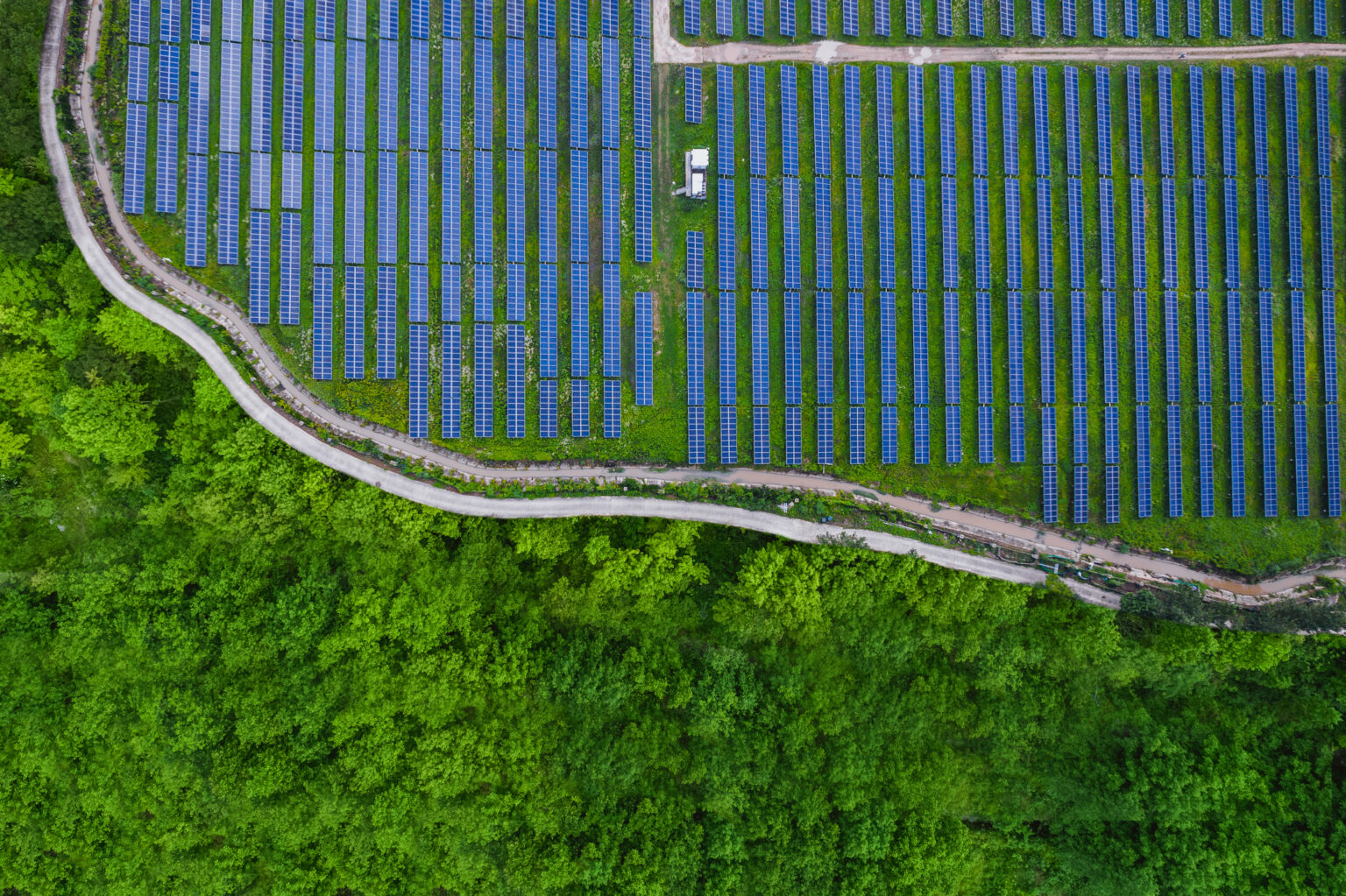
Think of it like this: you’ve signed up for a renewable energy plan, but the solar panels aren’t on your roof – they’re at a solar farm hundreds of kilometres away. That farm pumps clean electricity into the national grid, the same grid that delivers power to your sites.
The innovation lies in how we track it. A digital platform monitors exactly how much renewable energy the solar farm produces and how much electricity your sites consume. At the end of the month, you receive credits for the clean energy that was generated on your behalf – even though it flowed through the national grid alongside everyone else’s power.
Virtual wheeling is essentially a sophisticated energy accounting system. The renewable electricity physically goes into the grid, your sites pull electricity out of the grid, and the platform ensures you’re credited for the renewable energy you’ve paid for. No need for direct cables. No need for all your operations to be in one place. Just clean energy, smartly tracked.
Why this matters for South Africa
South Africa’s electricity system has been under immense pressure. Loadshedding has been part of daily life for years. The power supply is heavily reliant on coal, making it one of the most carbon-intensive in the world. And for businesses wanting to reduce their environmental impact, the path to renewable energy has been frustratingly blocked by red tape and technical limitations.
Katherine Persson, Managing Director of SOLA Group, at the launch of the Springbok Solar Farm on 28 October in Virginia, South Africa
Traditional wheeling – where a renewable energy producer sells directly to a business through the grid – exists, but it’s complicated, expensive, and really only works for large single sites with direct grid connections. For a telecommunications company with thousands of base stations dotted across hundreds of municipal boundaries, it simply wasn’t viable.
Vodacom became the first company in South Africa to operationalise virtual wheeling at scale. We partnered with SOLA Group, which built a solar power plant in Virginia in the Free State. Our subsidiary Mezzanine developed the digital platform that makes the whole thing work.

The triple win
This isn’t just good for our carbon footprint (though it absolutely is that). Virtual wheeling creates what you might call a triple win:
First, there’s the planet. Every unit of solar power we use is one less unit of coal-fired electricity. South Africa’s power supply has a high emissions factor of approximately 1.01 tonnes of CO₂e (carbon dioxide equivalent) per megawatt-hour. By shifting to renewables, we’re making a tangible dent in our carbon emissions, supporting our goal to reach net-zero greenhouse gas emissions by 2035.
Second, there’s the power supply itself. Every megawatt of renewable energy that gets added to the system is one more megawatt available to South Africans. Virtual wheeling doesn’t just help us – it helps ease the pressure on the power supply and reduces the likelihood of loadshedding for everyone.
Third, there’s the business case. Renewable energy through virtual wheeling can deliver cost savings of 5-20% compared to traditional grid electricity, depending on the technology and time-of-use. Doing the right thing for the environment doesn’t have to mean sacrificing your bottom line. Mezzanine is operationalising this into revenue streams.
Further together, towards a cleaner future
This innovation speaks directly to our purpose: to connect for a better future. Virtual wheeling connects renewable energy producers with businesses that want to reduce their environmental impact. It connects technology with sustainability. It connects today’s energy challenges with tomorrow’s solutions.
Crucially, it’s replicable. We’ve built the blueprint and proven that it works. Now other companies with dispersed operations – retailers, banks, logistics firms – can follow the same path.
The road ahead
Virtual wheeling is part of a broader commitment to environmental responsibility that runs through everything we do. We’ve already matched 100% of our purchased grid electricity across our African operations with renewable sources, and we’re constantly looking for new ways to reduce our environmental footprint.
This is what protecting the planet looks like in practice – through tangible innovations that solve real problems. Virtual wheeling removes the barriers that have kept businesses locked into carbon-intensive energy. It proves that with the right technology and partnerships, we can build a cleaner, more sustainable future.
Because when technology connects us to cleaner energy, everyone wins. For more content about sustainable living and saving the environment, click here.