Software and services to help businesses of every size budget and track spending.
Managing finances and budgeting for the future is a big part of running a business. As many companies close their previous financial year and start a new one, this is a good time to refresh knowledge of those fundamentals. It’s also an excellent time to look at how software can help you run your finances in better and smarter ways.
There are several options to manage your finances, from the always-reliable spreadsheet to feature-rich accounting platforms. Let’s look at four categories: spreadsheets, bank budgeting tools, accounting platforms, and professional services software.
Spreadsheets
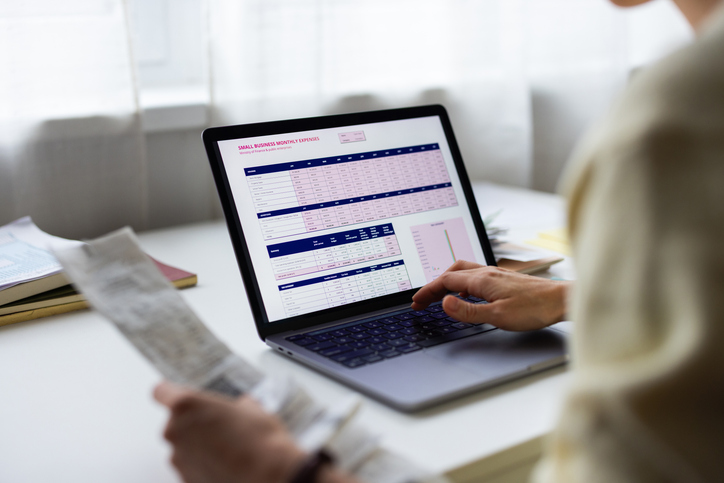
They might not be the new kids on the block, but don’t count out spreadsheets as budgeting tools. Trusted for decades, a spreadsheet is as simple or complicated as you make it. They’ve got several functions that speed up and automate business processes. Pivot tables help you summarise and tabulate data in seconds to answer key questions; ultimately cutting down hours of manual manipulation or analysis. Formulas allow you track spend as you go, giving you an overview of your budget and key improvement areas. The secret is to start small and expand your spreadsheet as your needs and insights change.
The two major spreadsheet brands, Microsoft Excel and Google Sheets, have templates for budgets, and you can also visit sites like Bettersheets and Vertex42 for more template options. There are also plenty of free online resources, including from Google and Microsoft, to teach you spreadsheet tricks.
Bank budgeting tools
Budgeting is a habit, and like all habits, it’s helpful to start with a low-friction approach. This is where banking budget tools are very useful. Every major bank in South Africa offers free budgeting tools and they help businesses tracking spend, categorise expenses, and analyse real-time transaction data from bank accounts to create budgets, monitor cash flow, and generate financial reports. They also help businesses establish spending limits, and identify financial trends. While features vary, they all have one thing in common: the tools can draw financial information directly from your bank account without creating security risks by linking to an outside service.
Start by visiting your online banking or banking app and checking what budgeting tools they have on offer. You’ll find budgeting tools at Standard Bank, Nedbank, Absa, Capitec, Discovery, Old Mutual, FNB, and TymeBank.
Accounting platforms
Depending on the size and complexity of your business, at some point it will be worth using an accounting platform. These services offer the same features as the above categories, but they also include features that are specific to business management. For example, they can track invoices, check for payments, generate reports, and prepare for tax filings. The leading platforms also include automation and artificial intelligence to streamline financial management.
It’s always best to do a little research, try out different options and select your preferred platform based on your business needs. The leading choices include Fiskl, Sage, Zoho Books, SAP Business One, Xero, Intuit Quickbooks, and Govchain.

Professional Services & ERPs
Once companies reach a certain size, it’s worth moving to professional services and ERP (enterprise resource planning) software. While accounting software focuses on financial management, professional services and ERPs incorporate more parts of the business, such as planning, inventory, CRM, and timesheets. They can often draw data from dedicated software, such as a payroll and HR platform. These systems bring the entire business together and are suited for teams. If you already employ an accountant or managers, this level of software can be a massive timesaver and create consistent oversight.
As with accounting software, your choice depends on your business needs, so investigate several options. Also, set time aside for some basic training (usually offered for free by the software vendor). Leading options include Vodacom BusinessOne+, Sage X3, BigTime, SYSPRO, Fusion Software, and ACS Embrace. Very large companies use ERPs such as SAP, Oracle, Microsoft Dynamics 365, and Workday.
Incorporate these tools in your playbook and set your business up for success in fiscal year 2027. Check out Vodacom Business to get more insights on tech solutions that will help your company thrive!