Keep your customers and employees engaged even when they run out of mobile data.
Imagine this scenario: someone was in an accident. Their anxiety and stress levels are spiking. They need peace of mind, which they’ll get when they file an accident claim right there and then with their insurer. But they have run out of mobile data and can’t load the insurance portal.
Here’s another scenario: an enthusiastic shopper browses specials on their favourite retail app. They spotted some great bargains and loaded up their cart. But just as they get ready to check out, their prepaid data is gone, so they abandon their cart.
One more: an employee wants to buy a new home appliance, but they need their payslip for the credit application. They try to log on to their company’s convenient self-service payroll portal. Yet, they don’t get far because they have no more data.
None of these scenarios are the fault of the insurer, retailer, or employer. Still, they end up with lost sales, tarnished brands, and unhappy staff.
However, what if they could intervene? What if they could make that service available without the visitor needing to use their personal data? Reverse Billed Data makes that possible.
The impact of no data
In markets where mobile internet dominates and most people use prepaid services, running out of data is a major reason for lost engagement. In South Africa, a market with over 90 million prepaid mobile subscriptions (ICASA), data shortfalls have a real impact on customer experiences and employee inclusion.
However, an organisation can handle these issues strategically, enabling selective reverse data billing that provides access to specific strategic websites and apps.
Covering customer and employee mobile data costs for selective access is good for the business. Here are some examples:
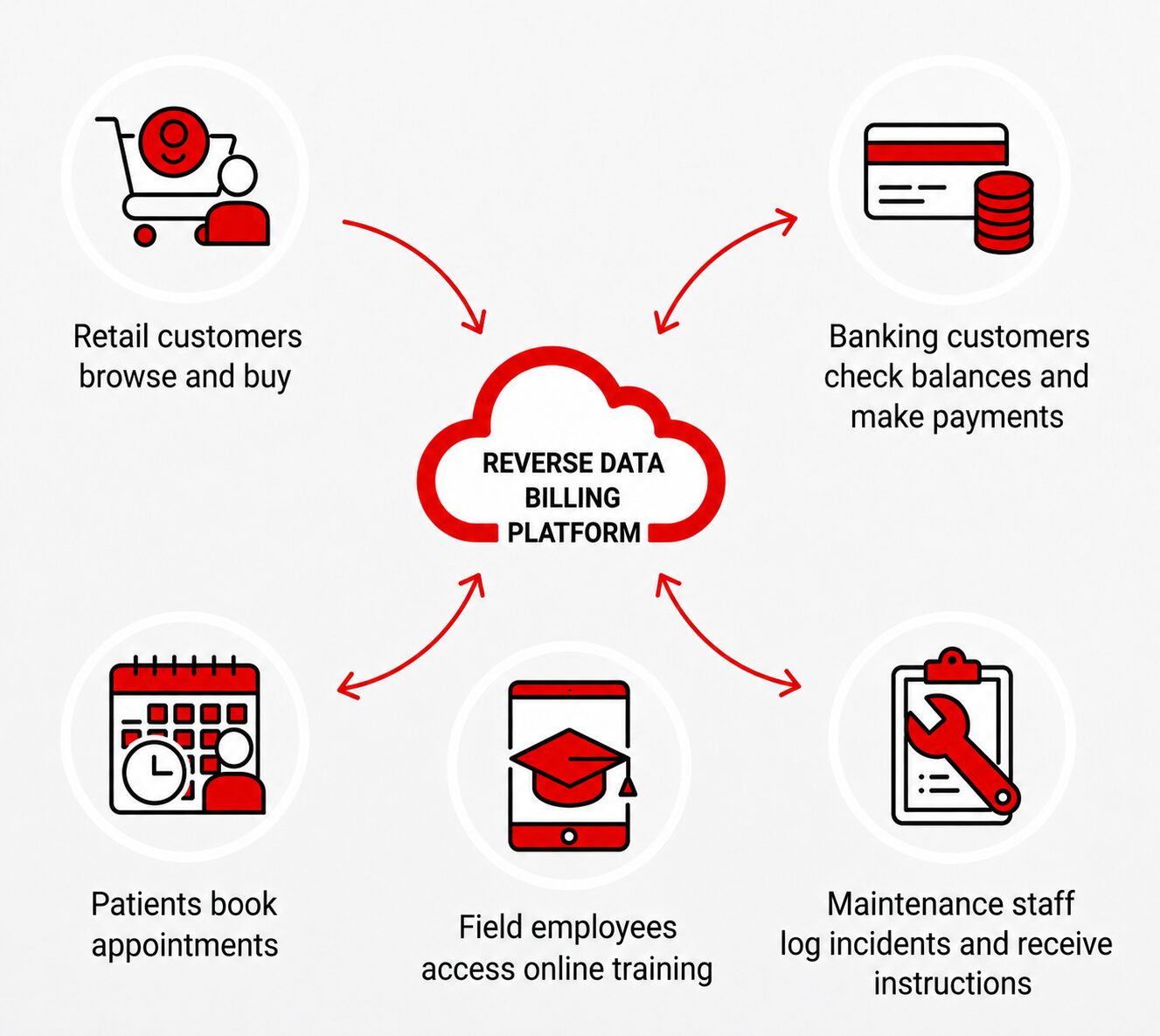
- Insurance customers can submit accident claims instantly, calming a stressful event.
- Loyal customers can enjoy data-free usage of their favourite brand’s app.
- Residents can report faults to municipalities, pay bills, or access information.
Employees can also benefit from selective free data access:
- Field employees can access corporate training platforms.
- Field sales reps can submit orders and send quotes while visiting clients, enabling better customer service.
- Factory staff can clock in and out, view schedules, or complete digital checklists on their phones.
- Field technicians can access job cards, manuals, and fault-logging systems while on site
- Guards and maintenance staff can log incidents and receive instructions.
Always enable customer and employee access to company resources
These and many more use cases rely on Reversed Billed Data from Vodacom Business.
This service offers different preferred business rates to medium and large enterprises. Your business can specify exactly which sites, pages and apps qualify for the service. You can set budgets and limitations, with tiered billing, usage-based sliding scales, full control, and visibility to manage data costs.
Stop losing sales or alienating employees just because someone ran out of data. Reversed Billed Data reduces friction, user frustration, and adoption churn. Even a small reduction in bounce rates can translate into significantly more sales and faster change management.
Think of an online service your business provides. Now think what it means when customers and staff can access it regardless of their circumstances. Thousands of South African businesses already use reverse data billing because it works. It’s a small investment that drives real returns.