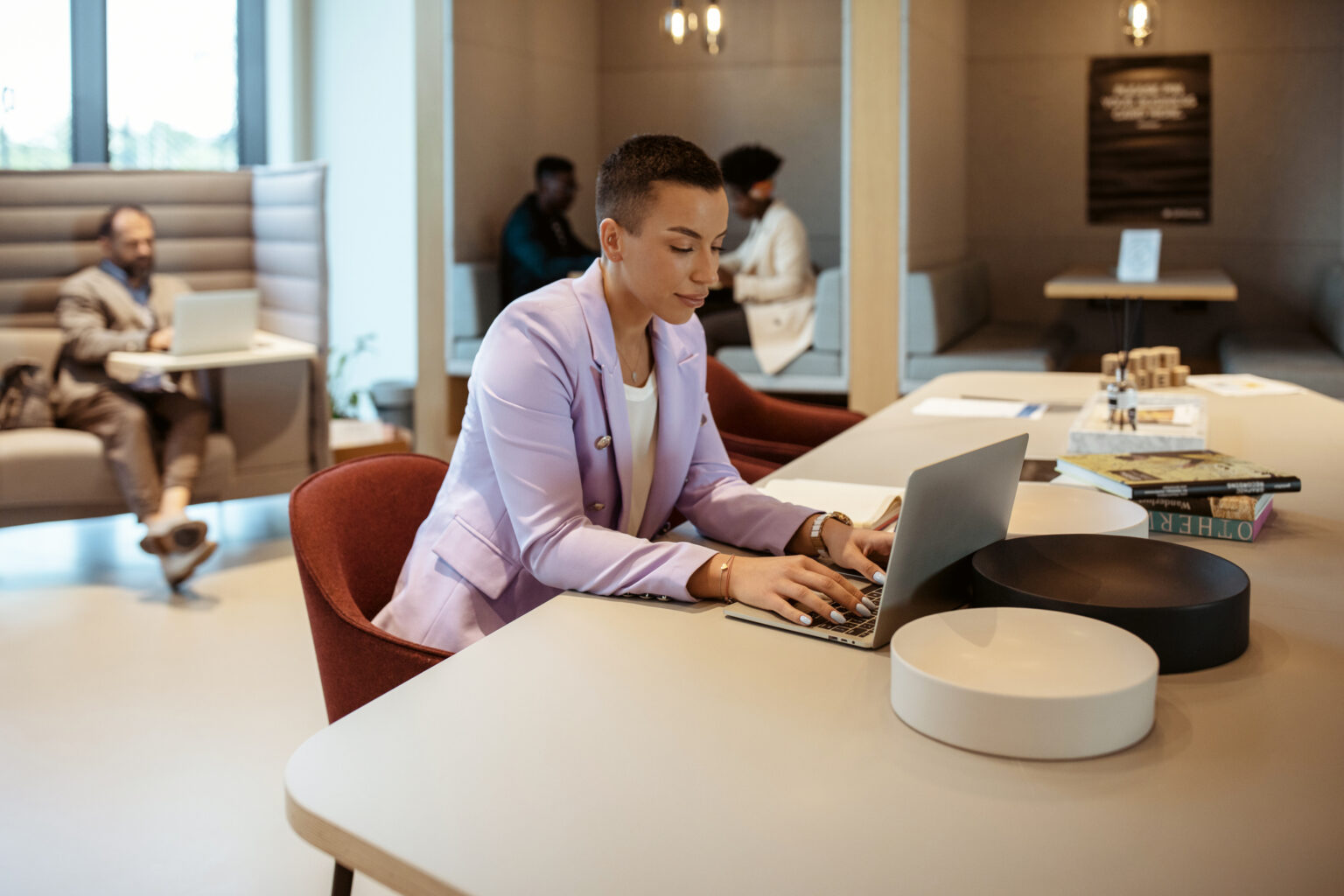
Where businesses can start their smart office improvements.
Today is an office day on Sarah’s hybrid work schedule. Commuting took longer than expected, but fortunately she could use her phone to book a conference room for an important meeting that morning. The first to arrive at the office, she taps in with her smart access card, and the space comes alive: turning on lights, opening curtains, and adjusting the room temperature.
Sarah gets coffee from the automated brewing station, then locates an open desk on the interactive office display. While she checks her emails, the reception sign-in system notifies her that her guests have arrived. The security system issues them with guest passes, while a display screen directs them to the elevator and tells them which floor to select.
Sarah meets her guests at the elevator on her floor. She offers refreshments, placing an order on her office app.
They start their meeting, joined by several remote employees. The office’s integrated video conferencing system makes this seamless, with cameras and microphones ensuring that everyone can see and hear what is being discussed. Sarah makes several important points on a digital whiteboard, which are shared with the attendees via email, drawn from her contact book.
The meeting is a success. She sees her visitors off, then books an ad hoc private space so she can focus on her notes and follow-up tasks.

Smart offices create smart work
This scenario isn’t a glimpse at the future. It happens right now, every day, in organisations across the world.
Flexible workspaces supported by Internet of Things (IoT) technologies are making offices more efficient for businesses and their occupants. Intelligent climate control and smart lighting keep utility bills low without sacrificing comfort levels. Equipment and building managers can track usage levels and occupancy patterns. Smart security creates real-time visibility and access control without inconveniencing employees and visitors.
Every office can draw enormous benefits from smart office technologies, in sectors as varied as retail, healthcare, and mining.
Reap the benefits of a smart office:
- User experience: Smart offices exist to serve the people working in them, and the best strategy is to create smart systems that align with their needs. Use user experience as the guiding design principle. Provide smart services that make sense to people and are unintrusive. Select smart systems that simplify routine tasks or integrate with other services, such as SharePoint or Slack.
- Networking: A good network is essential for smart offices, connecting different services and capturing data for analysis. This network can be a combination of technologies, such as a wired network connected to a fast fibre line, and using Wi-Fi and mobile broadband to connect sensors and other wireless devices. Connecting systems such as medical devices with IoT enables sites to centralise monitoring and create comprehensive visibility.
- Facility management: Sensors and smart appliances connect to the smart office network, sending and receiving information that improves their performance. Printers warn ahead of time about low ink or paper issues. Lights adjust dynamically based on readings from light sensors. HVAC systems adjust temperatures to be comfortable in different rooms. Dashboards keep track of utility costs and integrate renewables such as solar. Monitor assets for maintenance and intervene before they break down.
- Occupancy management: Automatically track how many people are in the office, or even in a specific room. Office managers will know if spaces are underutilised or need to accommodate more people. Collaborative spaces have time limits to ensure everyone gets a chance to use them, and apps and booking screens make it simple to book meetings and privacy pods. Cameras can even scan shelves to spot when they run low and need restocking.
- Access and security: Smart offices remove access friction without sacrificing security. Security cameras intelligently count how many people enter or exit an area, and tracking mobile phones anonymously creates an accurate location map for emergencies or monitoring. Smart cards open doors and implement personal preferences. Connected breathalysers maintain safety standards, and smart cameras can detect safety violations.
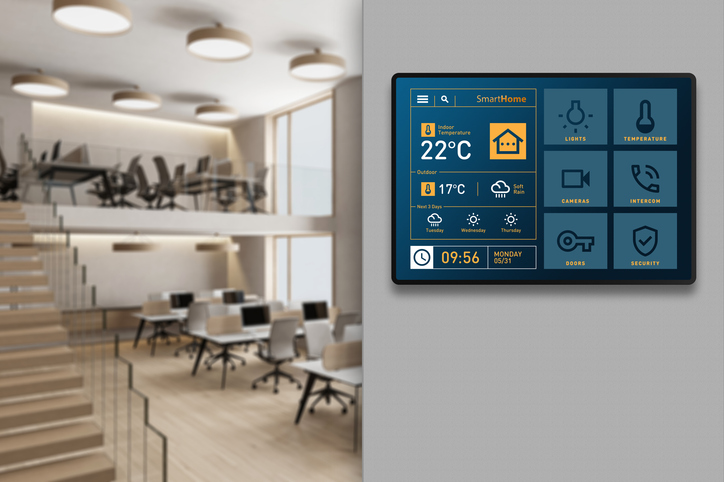
Start making your office smarter
A smart office creates advantages for people at work and people who run the site. A business can start small, focusing on specific benefits before expanding into other opportunities. With so many good use cases available, they can focus on equipment efficiency, security, or quality of life enhancements.
Whatever the goals, start by talking to smart office experts like Vodacom Business. They have deployed smart systems for companies of all sizes and across all sectors, including healthcare monitoring in hospitals, safety management at mines, and tracking customer movement in retail spaces. These experts help design the right technology foundation and select smart technologies that make sense for your company, people, and assets.