
The festive season is fast approaching, preceded by the excitement of the “silly season.” As companies roll out their year-end summer campaigns, many of us are eagerly anticipating Black Friday bargains, holiday getaways and spending quality time with family and friends.
Unfortunately, the increased excitement and activity surrounding these events also attract scammers seeking to take advantage of unsuspecting consumers.
From fake prize alerts to social media competitions impersonating trusted companies, scammers employ a variety of deceptive tactics to persuade people to disclose personal information or part with their money.
So, how can you tell whether a competition is genuine or just another scam? The good news is that there are clear warning signs.
1. You’ve Won a Competition You Never Entered
One of the most common signs of a competition scam is receiving a notification claiming that you’ve won a prize for a competition you never entered. Scammers often send messages via SMS, email, WhatsApp, or social media to create excitement and lower your guard.
These messages may congratulate you on winning a cash prize, smartphone, holiday package or shopping voucher and then ask you to provide personal information, banking details or even pay a “processing fee” to claim your prize. In reality, no legitimate competition can select you as a winner if you never participated in the first place.
2. The Prize Seems Too Good to Be True
If a competition promises an extravagant prize such as the latest top-of-the-range smartphone, a luxury overseas holiday or a large cash payout, it’s worth taking a closer look before getting excited. Scammers often use highly desirable prizes to capture attention and entice people into engaging recklessly with their fraudulent schemes.
While legitimate competitions do offer attractive prizes, scam promotions frequently advertise rewards that seem unusually generous or unrealistic, especially when there is little effort required to enter.
3. The Fraudster Impersonates a Well-Known Brand
Fraudsters often create fake social media accounts, websites or email addresses that closely resemble those of trusted brands. At first glance, these may appear legitimate, using company logos, brand colours and promotional content to convince people that they are genuine.
However, there are usually subtle differences. The impersonation may contain extra characters, misspellings, or slight variations of the official brand name. Similarly, the logo may be outdated, poorly reproduced or slightly altered. Fraudsters may also use fake website addresses that closely resemble the real company’s web address, hoping that users will not notice the difference.
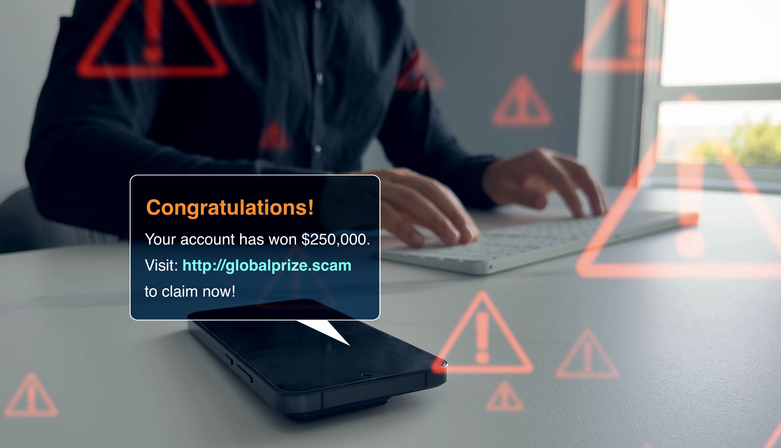
4. You Are Required to Click a Link or Provide Sensitive Information
If you’re pressured to click on a link to claim a prize, access a special offer or update account details, stop and verify first. Scammers often use fake links to steal sensitive information or gain unauthorised access to your accounts.
Also treat with caution any request for sensitive personal, financial or banking information. Fraudsters often use urgency or fear tactics to trick individuals into sharing confidential details that can be used for identity theft or financial fraud.
5. The Competition Terms and Conditions Are Missing, Vague or Difficult to Verify
Legitimate competitions are usually accompanied by clear terms and conditions that explain how the competition works, who is eligible to enter, the closing date, how winners will be selected and how prizes will be awarded. These rules are intended to ensure transparency and provide participants with confidence that the competition is genuine and fair.
Scammers, on the other hand, often avoid providing detailed terms and conditions altogether. In some cases, they may include vague or incomplete information that leaves key questions unanswered. Fraudsters deliberately keep information vague to avoid scrutiny and make it easier to adapt/change the rules when difficult questions arise.
6. You Are Pressured to Act Quickly or Risk Losing Your Prize
Creating a sense of urgency is one of the most common tactics used by scammers. They know that when people feel rushed, they are less likely to stop, think critically, or verify whether a competition is legitimate.
You may receive a message claiming that you have won a prize, but must respond within a few hours or risk forfeiting it. Some scammers may tell you that the prize is available only for a limited time, while others may insist that immediate action is required to secure your winnings.
Pressure and urgency are common warning signs of a scam. If you are being rushed to act, pause, think and verify before you act.
Browse our latest stories to experience tech made easy.